
The global energy transition has decisively evolved from lofty political declarations and abstract climate targets into the most fiercely contested industrial race of the 21st century. At the center of this geopolitical chessboard stands low-carbon hydrogen—most notably green hydrogen (H2V), produced through water electrolysis powered purely by abundant renewable sources like wind and solar. Heavy industrial sectors that cannot be easily electrified with lithium-ion batteries—such as primary steelmaking, international container shipping, agricultural nitrogen fertilizers, and commercial aviation—urgently require zero-emission green molecules produced at unprecedented scale.
In this high-stakes landscape, Brazil has enacted the most consequential regulatory landmark in its modern economic history. With the comprehensive roll-out of the Low-Carbon Hydrogen Legal Framework (anchored by Federal Laws No. 14,948/2024 and 14,990/2024), South America’s largest economy has introduced rock-solid legal certainty, structural tax exemptions, and multi-billion-dollar subsidies. By combining the cleanest electric grid among major global economies with an aggressive fiscal package, Brazil has positioned its deepwater coastal ports at the top of international green infrastructure portfolios.
Key Takeaways: What You Need to Know
- Regulatory Oversight by the ANP: The framework designates the National Agency of Petroleum, Natural Gas and Biofuels (ANP) as the primary regulatory and licensing authority across all stages of production, storage, pipeline transit, and trade.
- Structural Tax Relief via Rehidro: The Special Incentive Regime for Low-Carbon Hydrogen Production (Rehidro) suspends federal PIS/Cofins taxes on the domestic procurement and importation of industrial machinery, construction inputs, and capital assets.
- R$ 18.3 Billion in Direct Fiscal Credits: Through the National Low-Carbon Hydrogen Development Program (PHBC), the federal government will disburse roughly $3.5 billion in competitive production tax credits between 2028 and 2032 via transparent reverse auctions.
Powering the Framework: From Rehidro Exemptions to PHBC Carbon Credits
Developing gigawatt-scale green hydrogen industrial plants requires massive upfront capital expenditure (capex) during the foundational construction phase of electrolyzers, dedicated high-voltage substations, and pressurized pipeline networks. Acknowledging this financial barrier, Brazilian policymakers engineered a balanced dual-engine mechanism that slashes buildout costs while guaranteeing early off-take revenue viability.
The foundational pillar is Rehidro. Modeled after proven national infrastructure incentive programs, Rehidro fully suspends federal value-added contributions on capital acquisitions, civil engineering materials, and specialized engineering services destined for permanent facility assets. Furthermore, it qualifies developers to issue tax-exempt infrastructure bonds (debêntures incentivadas), unlocking domestic institutional capital and private wealth funds without income tax penalties. In exchange, qualifying operators must adhere to rigorous local-content thresholds and commit a percentage of gross revenues toward domestic Research, Development, and Innovation (R&D).
Operating alongside Rehidro is the PHBC program, governed jointly by the Ministry of Finance and the Ministry of Mines and Energy. Supplying R$ 18.3 billion in carbon credits, this fund serves as a market equalizer during the sector’s formative commercial decade. Awarded via competitive auctions, these fiscal credits bridge the price gap between clean hydrogen and carbon-heavy fossil alternatives. Should a winning project have zero federal tax liability to offset, the credit balance is directly settled in cash by the Brazilian federal treasury.
The Port of Pecém and the Rise of Brazil’s Renewable Northeast
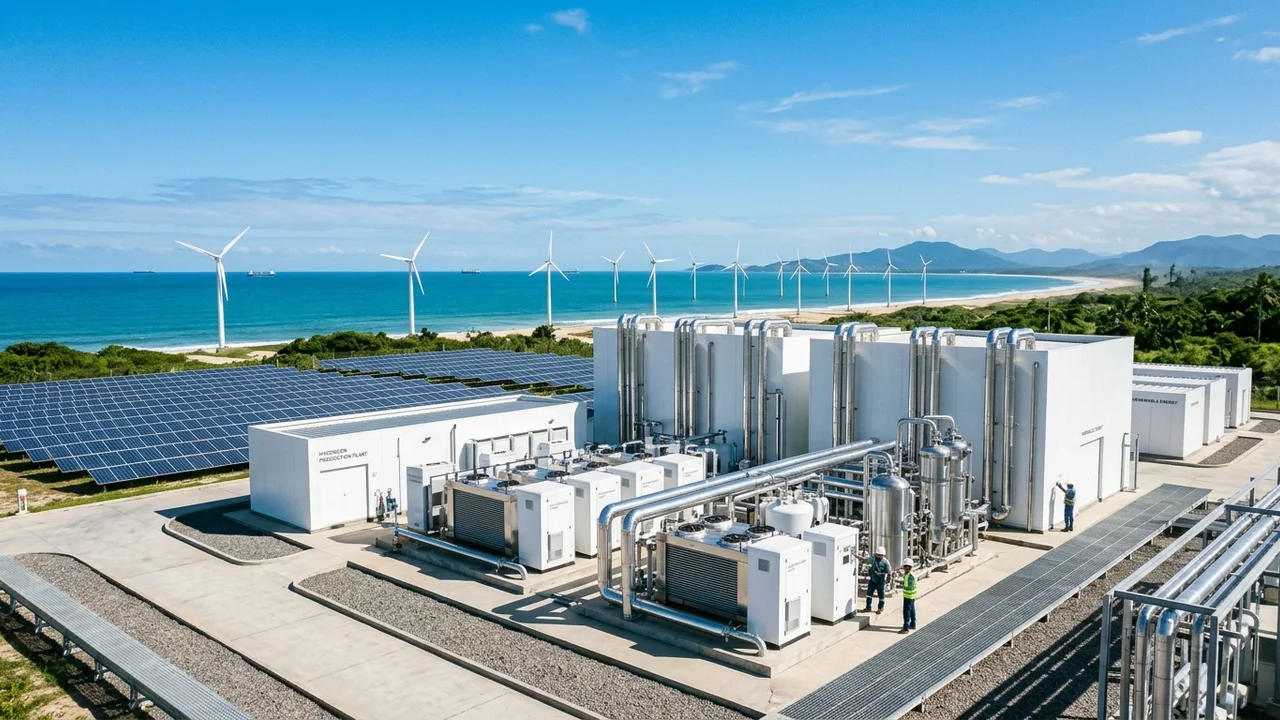
The geographic center of Brazil’s green hydrogen economy is anchored along its northeastern coastline. Blessed with constant, high-velocity trade winds and some of the world’s highest photovoltaic solar irradiance levels, the region yields renewable electricity at a levelized cost of energy (LCOE) dramatically lower than potential sites across Northern Europe, the United States, or East Asia.
Within this thriving ecosystem, the Pecém Industrial and Port Complex (CIPP) in Ceará has emerged as the premier green molecule hub of the Americas:
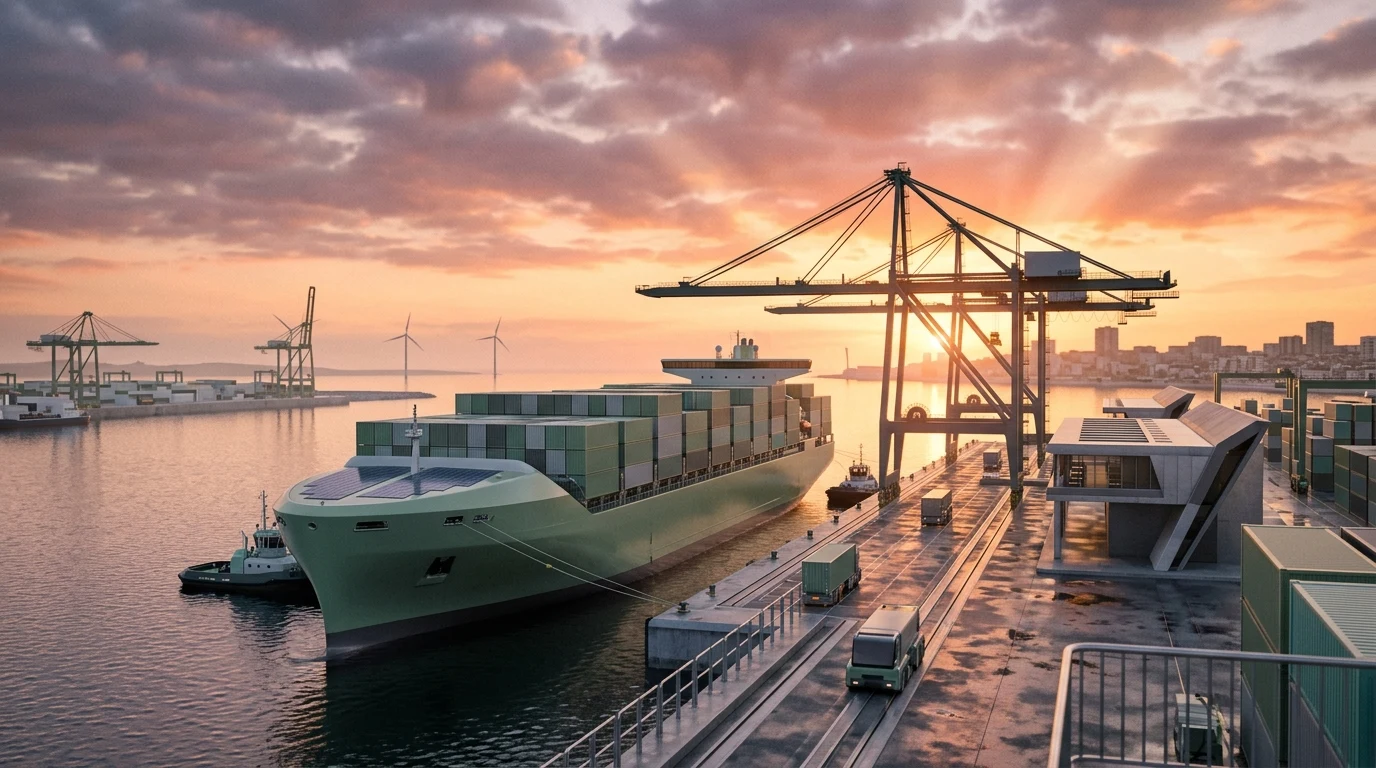
- Export Processing Zones (ZPEs): Pecém seamlessly integrates deepwater berths directly connected with the Port of Rotterdam (a strategic 30% equity partner) with world-class free-trade export zone customs regimes.
- Over 30 Multinational Bilateral Accords: Global utility leaders, chemical conglomerates, and sovereign wealth investors have pledged tens of billions of dollars across signed memoranda of understanding and formal land-reservation contracts.
- Integrated Green Ammonia Synthesis: Because pure liquid hydrogen requires extreme cryogenic chilling (-253°C), the hub converts output into green ammonia directly on site for maritime transit to European chemical conglomerates and Brazilian agricultural fertilizer distributors.
Parallel mega-hubs at Suape (Pernambuco), Port of Açu (Rio de Janeiro), and Camaçari (Bahia) are mirroring this momentum, targeting both domestic industrial decarbonization and export synthetic fuels.
The SBCH2 Certification System and the European CBAM Challenge
Among the most sophisticated components of the Brazilian legislation is the implementation of the Brazilian Hydrogen Certification System (SBCH2). Rejecting superficial greenwashing metrics, the national certification enforces a comprehensive Life Cycle Assessment (LCA) methodology spanning “cradle-to-gate” operations.
To receive official low-carbon classification—capped at a strict threshold of 7 kilograms of CO₂ equivalent per kilogram of produced H₂—the entire supply chain undergoes third-party audits. This includes the manufacturing footprint of wind turbines, transmission loss calculations, and water desalination plant emissions. This verified transparency serves as an essential passport to overcome the European Union’s Carbon Border Adjustment Mechanism (CBAM), ensuring that Brazilian green steel and clean chemicals enter global supply chains immune to punitive border carbon tariffs.
Frequently Asked Questions (FAQ)
What is Rehidro and which companies qualify for its benefits?
Rehidro is the Special Incentive Regime for Low-Carbon Hydrogen Production in Brazil. It suspends federal PIS/Cofins taxes on the purchase and import of industrial equipment, instruments, and construction supplies for new plants. Licensed producers complying with technical standards set by the ANP, local procurement quotas, and mandatory R&D spending are eligible.
How does the R$ 18.3 billion PHBC credit allocation work?
The PHBC program will conduct competitive reverse auctions between 2028 and 2032. Production projects offering the lowest emissions intensity and highest operational efficiency will receive federal tax credits to offset tax obligations or receive direct treasury cash reimbursements, making clean hydrogen economically competitive with legacy hydrocarbons.
Is Brazil’s green hydrogen intended exclusively for foreign export?
No. While export contracts to Europe and Asia represent crucial initial bankability catalysts, the framework strongly emphasizes domestic industrial substitution. Green hydrogen is slated to replace imported natural gas across high-heat cement kilns and steel mills, while providing clean feedstock for national fertilizer plants to reduce sovereign agricultural import dependency.
Conclusion: From Natural Potential to Global Clean Sovereignty
The establishment of Brazil’s green hydrogen framework and its billions in targeted fiscal incentives marks an epochal transition: moving from a historical exporter of raw, unrefined commodities to a technological sovereign of the global clean economy. By matching extraordinary natural resources with transparent, audited industrial governance, Brazil is seizing its long-promised role as the world’s leading green superpower.
Do you believe green hydrogen will revitalize heavy manufacturing and transform regional economies across Latin America? Share your perspective in the comments below!
🔗 Consulted Sources & References:
- Presidency of the Federative Republic of Brazil — Federal Laws 14,948/2024 and 14,990/2024: Low-Carbon Hydrogen Framework & Rehidro
- National Agency of Petroleum, Natural Gas and Biofuels (ANP) — Technical regulations, operational licensing, and the SBCH2 Certification System
- Pecém Industrial and Port Complex (CIPP) — Green Hydrogen Hub infrastructure, ZPE free-trade zones, and international export pipelines
- National Confederation of Industry (CNI) — Decarbonization analytics, PHBC market impact, and clean industrial competitiveness