

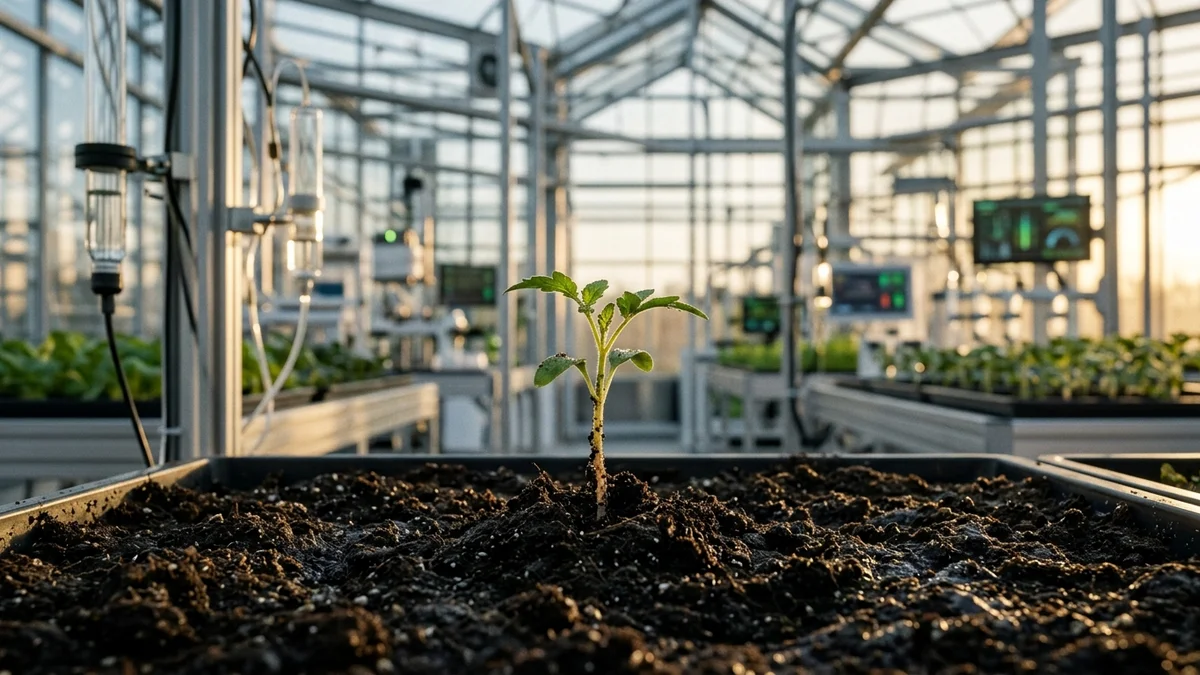
Long celebrated as the planetary breadbasket for its sheer volume of grain and animal protein production, Brazil’s agribusiness sector is undergoing an unprecedented structural metamorphosis. The nation is swiftly moving beyond its legacy role as an exporter of raw agricultural commodities to establish itself as the premier global powerhouse of applied biological intelligence: the era of Agri-Deeptechs and precision biosolutions.
Driven by the powerful convergence of synthetic biology, targeted CRISPR gene editing, predictive artificial intelligence, and soil microbiomics, dozens of homegrown scientific startups are securing major financing rounds from Middle Eastern sovereign wealth funds, European climate-tech coalitions, and top-tier Corporate Venture Capital giants. The core objective is no longer merely harvesting more tons per acre, but radically decarbonizing the global agricultural supply chain by replacing synthetic fossil-based chemicals with targeted biological organisms.
Key Takeaways: What You Need to Know
- From Synthetic to Living Inputs: While global bio-inputs expand at an annual pace of 15% to 20%, Brazil demonstrates the fastest adoption rate worldwide, with more than 50% of major soybean and corn acreage already treated with biological solutions.
- Institutional Capital Inflows: Sovereign funds and crop science conglomerates are leading Series A and B equity checks exceeding $50 million into Brazilian deeptechs dedicated to biological nitrogen fixation and non-toxic biofungicides.
- Geopolitical Resilience: Curtailing exposure to vulnerable overseas fertilizer imports (notably from Eastern Europe) elevates domestic biological innovation to a strategic matter of sovereign economic security.
The Paradigm Shift: Benchtop Science Meets Tropical Agronomic Scale
For decades, tropical agricultural yields relied heavily on chemical fertilization and synthetic pesticides synthesized from petroleum derivatives. However, the environmental toll of soil salinization, volatile global supply chain shocks, and soaring prices for imported NPK (nitrogen, phosphorus, potassium) spurred an urgent technological pivot.
According to data published by Embrapa and strategic analysis from Brazil Journal, Brazil represents the fastest-growing market and development hub for biological crop protection in Latin America. While North American and European bio-input developers often face bureaucratic friction and restrictive short growing seasons, Brazilian farmland offers an ideal testing ground: multi-crop annual rotations in continuous tropical warmth and the planet’s richest microbial diversity across the Cerrado and Atlantic Forest biomes.
These innovative Agri-Deeptechs are not founded in casual software accelerators, but inside advanced research laboratories and leading agricultural universities like Esalq-USP, Unicamp, and UFV. Researchers systematically isolate beneficial native bacteria, fungi, and predatory nematodes engineered to neutralize crop pathogens with performance rivaling chemical standards, leaving zero chemical residue in food supplies.
       [Brazil's Agri-Deeptech Ecosystem]
                      │
   ┌──────────────────┼──────────────────┐
   ▼                  ▼                  ▼
CRISPR & RNAi     Soil Microbiome    Predictive AI
Gene Editing       & Bio-Inputs     & Remote Sensing
   │                  │                  │
   └───────────► [Farm of 2026] ◄────────┘
           Regenerative Yield Power
CRISPR and RNA Interference: Tropical Crops at the Genetic Vanguard
The most compelling technological leap lies in molecular genetics. CRISPR-Cas9 precision genome editing and RNA interference (RNAi) formulations have graduated from academic literature directly into large-scale commercial field trials.
Unlike first-generation GMOs—which introduced foreign genetic material into plants and triggered international consumer backlash—modern gene editing selectively activates endogenous drought-tolerance mechanisms or deactivates vulnerability pathways already native to the crop’s genome.
Brazilian biotech innovators are pioneering resilient sugarcane, soy, and maize cultivars that require up to 30% less water while sequestering atmospheric nitrogen through mutualistic partnerships with genetically optimized endophytic soil bacteria. For international venture capitalists, this technology combines defensible global patent moats with high-margin biological products perfectly suited to ESG-mandated corporate supply chains.
Sovereign Funds and the Surge of Global Corporate Venture Capital
Investor composition in Brazilian agriculture has decisively matured. While venture capital previously concentrated on digital logistics dashboards and B2B grain marketplaces, the largest institutional checks are now reserved for hard biological science.
Prominent sovereign wealth vehicles such as Mubadala and Temasek, collaborating with the Corporate Venture Capital arms of multinational agricultural leaders (Syngenta Ventures, Bayer Crop Science, and Yara), are competing for equity stakes in Brazilian biotech ventures. The underlying thesis is clear: whoever commands biological regeneration and climate-resilient yield in the tropics will govern the parameters of 21st-century food security.
Industry research from the Brazilian Private Equity and Venture Capital Association (ABVCAP) indicates that venture allocations toward agricultural biotechnology startups grew by over 65% in recent quarters, significantly outpacing consumer tech and fintech during high global interest rate environments. The resilience of the sector is anchored by inelastic food demand and corporate net-zero Scope 3 emission mandates.
Operational Hurdles: Cold Chain Logistics and On-Farm Biofactories
Despite rapid commercial traction, the sector must overcome notable logistical and quality-control challenges to maintain sustainable momentum:
- Cold-Chain Transport Realities: Living microbial agents demand consistent temperature control from factory floor to tractor sprayers, necessitating specialized regional cooling networks across vast farming heartlands.
- On-Farm Fermentation Governance: As large-scale growers increasingly install modular fermentation reactors directly on their estates to multiply bacterial strains, rigorous testing protocols are mandatory to avoid pathogen contamination.
- Cross-Border Regulatory Harmony: While Brazilian domestic biological frameworks have set an progressive global standard, export pathways for living microbial inoculants still face regulatory latency in European and Asian customs.
Overcoming these friction points is driving a secondary wave of intellectual property in nano-encapsulation and shelf-stable lyophilized formulations, enabling delicate beneficial organisms to withstand ambient temperatures for months before farm rehydration.
Frequently Asked Questions (FAQ)
What distinguishes Agri-Deeptechs from standard agtech startups?
Agri-Deeptechs are built upon years of fundamental laboratory research, proprietary biological patents, and molecular science (such as targeted microbial genetics, CRISPR, and synthetic biology). In contrast, conventional agtech firms primarily focus on software apps, satellite telemetry, or marketplace platforms without proprietary biological assets.
Why is Brazil positioned as the world leader in biological crop inputs?
Brazil’s tropical climate accommodates multiple harvest cycles per year, exposing crops to continuous biological pressures and demanding sustainable soil replenishment. Faced with high overseas costs for synthetic fertilizers, Brazilian growers and research institutes like Embrapa rapidly embraced, refined, and industrialized biological solutions at commercial scale.
Can biological solutions entirely replace synthetic chemical fertilizers?
Currently, biologicals operate as powerful symbiotic complements. In modern regenerative operations, they systematically reduce synthetic fertilizer and chemical pesticide dependency by 20% to 50% while rejuvenating soil microbial biodiversity, paving the way for gradual, high-yield sustainability.
The Big Picture & Future Outlook
Agricultural greatness in the decades ahead will no longer be determined solely by tonnage hauled out of harvest fields, but by the intellectual property and biological precision contained within every seed and microbial treatment. Brazil, once an importer of industrial farm chemicals from the global north, is emerging as an exporter of life-science breakthroughs that will feed humanity sustainably.
How is your organization adapting its strategic capital and operational investments to benefit from the dawn of biology-first global food systems?
🔗 Referenced Sources:
- Embrapa (Brazilian Agricultural Research Corporation) — Scientific research on tropical bio-inputs, nitrogen fixation, and agricultural biotechnology
- Brazil Journal — Venture capital equity rounds and deeptech expansion in Brazilian agribusiness
- ABVCAP — Market intelligence on private equity and venture allocations in Brazilian technology
- Nature Biotechnology — Scientific advances in crop CRISPR editing and tropical soil microbiome dynamics