
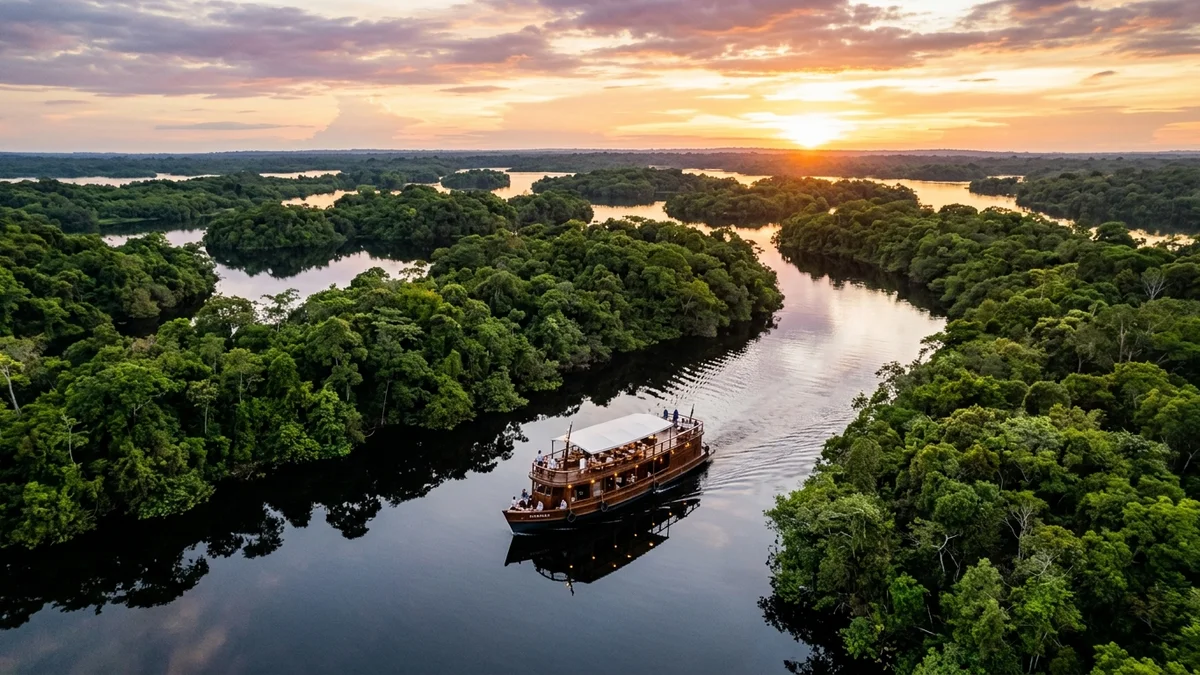
For decades, the conventional image of international river cruises has been associated with mega-vessels carrying hundreds of identical cabins, rigid buffet schedules, and timed excursions that offered little meaningful engagement with local rainforest communities. Across the Brazilian Amazon, however, a sophisticated and conscious counter-movement is turning that standard upside down: the rise of boutique expedition riverboats navigating the tranquil, mirrored black waters of the Rio Negro and the pristine Anavilhanas Archipelago.
Accommodating between 8 and 24 discerning travelers, these handcrafted wooden yachts integrate certified regional timbers, hybrid or 100% solar-powered propulsion, biological wastewater treatment, and exquisite menus curated by renowned chefs celebrating Amazonian socio-biodiversity. By prioritizing intimacy over mass tourism and quiet contemplation (slow travel) over rushed itineraries, these boutique expeditions have transformed the Brazilian rainforest into one of the globe’s foremost destinations for regenerative luxury ecotourism.
In a Few Lines: Key Takeaways
- Intimate Scale and Remote Tributary Access: With shallow drafts and small guest capacities, boutique riverboats effortlessly enter narrow jungle creeks (igarapés), flooded forests (igapós), and untouched white-sand river beaches inaccessible to standard commercial ships.
- Sustainable Engineering and Silent Cruises: State-of-the-art vessels feature rooftop photovoltaic solar arrays that power high-efficiency battery banks, providing silent evening air-conditioning without diesel generator fumes or vibration.
- Regenerative Community Stewardship: Expedition routes partner directly with riverine and indigenous communities in Novo Airão and Jaú National Park, investing in local naturalist guides, traditional craftsmanship, and agroforestry sourcing.
The Boutique Riverboat Vision: Floating Hospitality in the Canopy
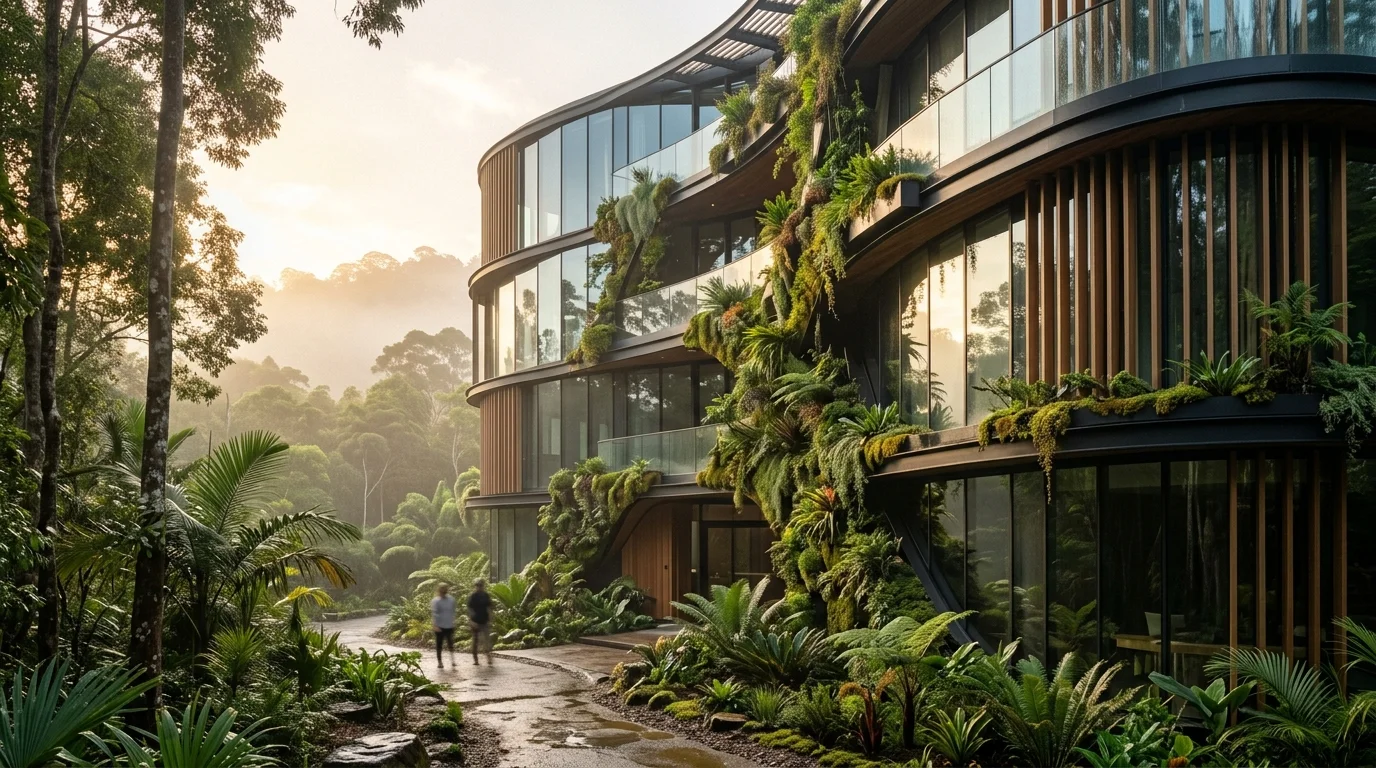
The onboard atmosphere of a boutique Amazonian expedition vessel bears no resemblance to impersonal corporate resort cruise lines. Every architectural detail is designed to immerse travelers in nature: expansive floor-to-ceiling panoramic glass walls in master staterooms allow guests to awaken to the reflections of towering jungle canopies, while polished teak observation decks offer front-row seats to spectacular equatorial sunsets and stargazing free from light pollution.
Pioneering operators in Brazil, including expedition yachts operating in synergy with luxury eco-lodges near Novo Airão, have established new benchmarks for rainforest hospitality:
[Core Pillars of Boutique Amazon Riverboats]
   ├── Biophilic Design ─────► Certified Amazonian hardwoods and natural cross-ventilation
   ├── Clean Energy ─────────► Rooftop solar arrays and silent marine lithium battery banks
   ├── Forest Gastronomy ────► Agroforestry ingredients, native river fish, and wild fruits
   └── Community Partnership ► Direct conservation funding and local cultural empowerment
Silent electric cruising enables close, respectful encounters with wildlife. Without loud engines alarming the riverbank, passengers in expedition skiffs and sea kayaks can quietly observe pink river dolphins (botos), giant river otters, nocturnal squirrel monkeys, and hundreds of rare bird species from mere yards away.
Forest Gastronomy and Authentic Cultural Immersion
A standout pillar of this new generation of river journeys is the celebration of hyper-local Amazonian gastronomy. Rather than importing standard Western hotel dishes, onboard galleys collaborate with Brazilian culinary masters who source seasonal harvests directly from riverside agroforestry cooperatives.
Menus masterfully balance contemporary fine-dining techniques with indigenous heritage: sustainably managed wild pirarucu and tambaqui fish, fermented yellow tucupi, wild Yanomami mushrooms, freshly shelled Brazil nuts, and rare Amazonian fruits like camu-camu, taperebá, and fragrant cupuaçu. Each dinner under the southern stars becomes a sensory masterclass in tropical ethnobotany.
Furthermore, visits to traditional riverside settlements across Anavilhanas National Park adhere to strict community-based tourism frameworks. Guests engage in natural fiber weaving workshops with female artisan collectives, learn traditional herbal pharmacopoeia from native forest dwellers, and generate direct revenue that funds community healthcare and education initiatives.
Planning Your Expedition: High-Water vs. Low-Water Seasons
For prospective voyagers, the hydrological rhythm of the Rio Negro basin creates two distinctly captivating journeys throughout the calendar year:
- High-Water Season (March to August): River levels rise between 30 and 45 feet, submerging vast forest tracts to form the ethereal flooded jungles known as igapós. This is the prime season for kayaking beneath tree canopies and marveling at mirrored reflections of forest life.
- Low-Water Season (September to February): Receding waters unveil hundreds of miles of deserted white-sand freshwater beaches, creating natural swimming lagoons with pleasant temperatures, dry hiking trails through terra firme rainforest, and torch-lit private dinners along river sandbanks.
Departing primarily from Manaus or Novo Airão with seamless private transfers, boutique Amazonian expeditions prove that modern luxury is no longer defined by ostentation, but by the privilege of experiencing the pristine silence of Earth’s greatest wilderness with exceptional comfort and reverence for the natural world.
Frequently Asked Questions
How many passengers typically travel on a boutique expedition boat in the Rio Negro?
Most boutique vessels cater to private groups of 8 to 24 passengers in dedicated en-suite staterooms, ensuring highly personalized service, tailored excursion schedules, and minimal ecological impact on visited riverbanks.
How does solar power function on these Amazonian riverboats?
Modern riverboats integrate high-efficiency marine photovoltaic panels on their top canopy deck to charge advanced lithium battery storage systems. This powers silent stateroom climate control, refrigeration, and vessel electronics overnight without noisy diesel generators.
Is it safe to swim in the Rio Negro during excursions?
Yes. The Rio Negro’s waters are naturally acidic (pH between 3.8 and 4.9) due to the decomposition of plant tannins. This unique chemistry naturally inhibits mosquito larvae proliferation and waterborne parasites, creating safe, refreshing freshwater swimming conditions across beaches and lagoons.
🔗 Consulted Sources & References:
- Brazilian Adventure Travel Association (ABETA) — Safety guidelines and sustainability standards in Brazilian marine ecotourism
- Chico Mendes Institute for Biodiversity Conservation (ICMBio) — Conservation management and visitation regulations in Anavilhanas National Park
- Viagem e Turismo (Abril) — Special editorial features on luxury expedition riverboats in the Brazilian Amazon
- Condé Nast Traveler — The world’s leading sustainable river cruise destinations and boutique boat travel