
For decades, dermatological anti-aging regimens relied almost entirely on a philosophy of controlled trauma: to compel skin to generate fresh collagen fibers, one had to apply high-concentration exfoliating acids, prescription retinoids, or undergo aggressive ablative procedures that triggered severe peeling, intense erythema, and acute photosensitivity.
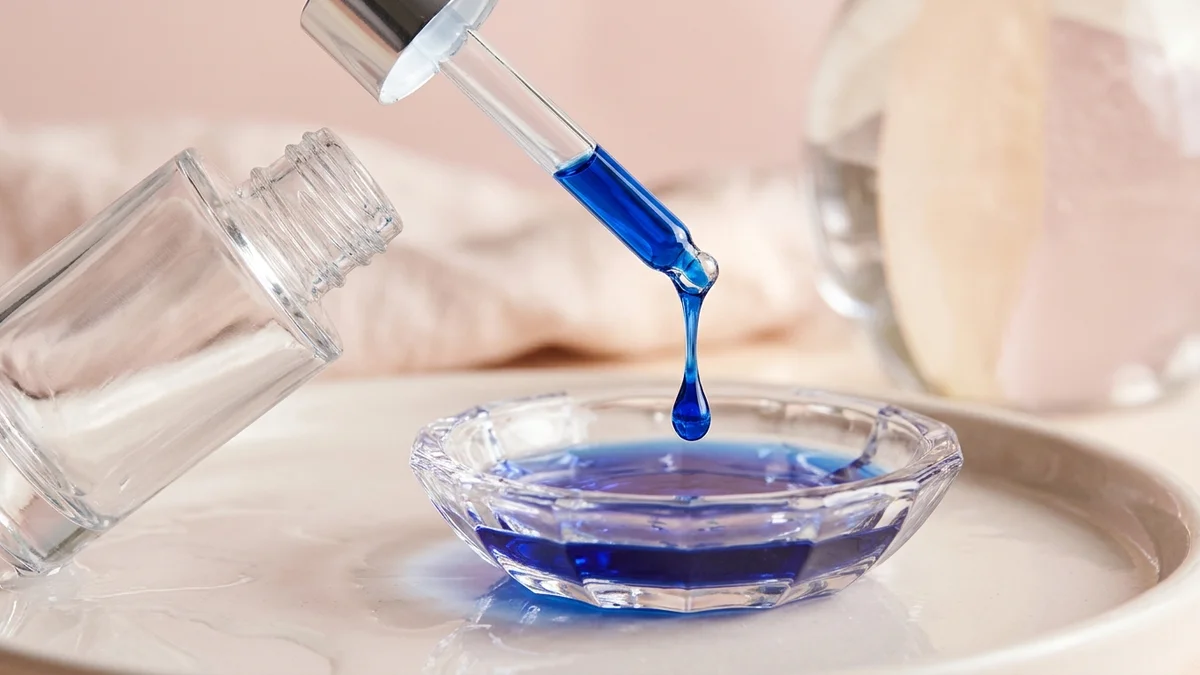
This punitive approach to skincare has increasingly given way to regenerative aesthetics and quiet beauty. At the vanguard of this scientific evolution sits a compound with an unmistakable vivid blue hue that has captured the attention of dermatologists and biotech laboratories worldwide: GHK-Cu, commonly referred to as copper peptides (Copper Tripeptide-1).
Unlike conventional chemical acids, GHK-Cu does not strip or compromise the skin barrier. Instead, it functions as a precision cellular messenger, sending targeted bio-signals to dermal fibroblasts to upregulate the synthesis of collagen, elastin, and glycosaminoglycans—rejuvenating tissue from within the body’s own physiological architecture.
Key Takeaways: At a Glance
- •Direct Cellular Signaling: GHK-Cu is a biomimetic amino acid-copper complex that naturally directs fibroblasts to produce collagen types I and III without surface peeling.
- •High Tolerance for Sensitive Skin: Unlike traditional retinoids, copper peptides protect the epidermal barrier, making them ideal for sensitive, reactive, or rosacea-prone skin.
- •Formula Compatibility: To preserve molecular stability, copper peptide serums should not be applied concurrently with low-pH pure Vitamin C (L-ascorbic acid).
The Molecular Biology: Why Copper Makes the Difference
The tripeptide GHK (glycyl-L-histidyl-L-lysine) was initially discovered in the 1970s by biochemist Dr. Loren Pickart in human plasma. It represents a naturally occurring protein fragment produced abundantly in youthful tissue, playing a critical role in wound healing, immune modulation, and genomic repair.
The biological dilemma is that systemic GHK levels decline precipitously over time: by age 60, plasma concentrations fall by approximately 60%, slowing cellular repair mechanisms and rendering the skin vulnerable to chronic micro-inflammation (inflammaging).
When complexed with ionic copper (forming the GHK-Cu molecule), the peptide functions as a catalytic signaling vehicle:
- Fibroblast Activation: Research cataloged in the National Center for Biotechnology Information (NCBI) demonstrates that GHK-Cu stimulates pro-collagen synthesis at levels comparable to all-trans retinoic acid, with the notable clinical benefit of causing zero contact dermatitis or epidermal dehydration.
- Extracellular Matrix Remodeling: Beyond synthesizing fresh structural proteins, GHK-Cu regulates metalloproteinases that clear damaged, cross-linked collagen, helping smooth post-acne textural irregularity and fine expression lines.
- Endogenous Antioxidant Support: The copper ion serves as a vital cofactor in activating superoxide dismutase (SOD), one of the body’s most potent frontline defense enzymes against free radical damage driven by UV exposure and urban pollutants.
Clinical Practice and the Rise of Drug Delivery
In modern clinical dermatology, physicians increasingly incorporate GHK-Cu not only into home-care cosmeceutical regimens but also into advanced post-procedure protocols.
As highlighted in symposium presentations and the Journal of Cosmetic Dermatology, targeted drug delivery alongside non-ablative lasers or microneedling has gained significant traction:
- By opening superficial micro-channels in the stratum corneum with sterile arrays, practitioners apply pharmaceutical-grade topical peptide solutions.
- The active molecule penetrates directly to the dermal-epidermal junction, accelerating post-treatment recovery and optimizing structural firmness.
Integrating Copper Peptides Into Your Daily Regimen
For those seeking to add this blue elixir to their daily routine, consistency and ingredient harmony are essential. Dermatologists recommend several foundational guidelines:
1. Application Timing and Texture
GHK-Cu serums typically feature a lightweight, water-gel consistency with rapid dermal absorption. The formulation can be applied either morning or evening, immediately following cleansing and preceding heavier lipid moisturizers or broad-spectrum sunscreen.
2. The Golden Rule of Formulation Incompatibilities
The most common mistake skincare enthusiasts make is combining incompatible actives within the same step. The copper peptide complex is sensitive to extreme pH shifts:
- Avoid Co-Application with Pure Vitamin C (L-Ascorbic Acid): Strong low-pH acids can destabilize the copper bond and cause premature oxidation of both formulas. If Vitamin C is part of your regimen, apply it in the morning and reserve copper peptides for your evening routine.
- Strong Direct Acids (Glycolic / Salicylic): For similar pH reasons, alternate usage across different days to prevent formula breakdown.
- Synergistic Pairings: GHK-Cu works exceptionally well alongside multi-molecular hyaluronic acid, niacinamide, physiological ceramides, and panthenol.
Conclusion: The Triumph of Biomimetic Skincare
The rising prominence of copper peptides confirms that the future of cosmetic dermatology lies not in the abrasive breakdown of the skin barrier, but in the delivery of refined molecular cues that reawaken the body’s innate regenerative power.
By replacing chronic surface irritation with intelligent repair, skincare reaches a mature, sustainable state: treatments that honor natural biological rhythms while forging lasting, radiant dermal health.
Frequently Asked Questions
What are copper peptides and why is the serum blue?
Copper peptides are short chains of amino acids bonded to copper ions (GHK-Cu). The brilliant sapphire or cyan hue is completely natural, arising from the chelated copper ion in solution—no synthetic artificial colorants are added.
Can copper peptides replace prescription retinoids?
They operate via distinct biological mechanisms. Retinoids accelerate epidermal cell turnover, often causing initial flaking, whereas copper peptides directly signal fibroblasts to produce structural matrix proteins and repair the barrier. Many dermatologists recommend GHK-Cu for individuals who cannot tolerate retinoids or advocate alternating both on separate evenings.
How long does it take to see visible improvements from GHK-Cu?
Because GHK-Cu works on deeper structural protein remodeling, improvements in skin radiance, hydration, and fine texture typically manifest within 2 to 4 weeks. Clinically noticeable improvements in firmness and skin elasticity generally reach peak visibility between 8 and 12 weeks of consistent daily application.
🔗 Consulted Sources & References:
- NCBI / National Library of Medicine (PubMed) — Regenerative and Protective Actions of the GHK-Cu Peptide in Light of the New Gene Data
- Journal of Cosmetic Dermatology — Clinical evaluations of copper tripeptide-1 on skin firmness, elasticity and wrinkle reduction
- American Academy of Dermatology (AAD) — Clinical overviews of peptide cosmeceuticals, barrier recovery, and aesthetic dermatology
- Allure Beauty & Science — In-depth investigative reports on copper peptide efficacy and biomimetic formulations
- National Institutes of Health (NIH) — Biological roles of copper-binding peptides in tissue remodeling and wound healing
Medical & Health Disclaimer
The information provided in this article is for educational and informational purposes only and does not constitute medical advice, diagnosis, or treatment. Always consult a qualified physician, nutritionist, or healthcare provider before beginning any supplement regimen or making changes to your wellness routine.