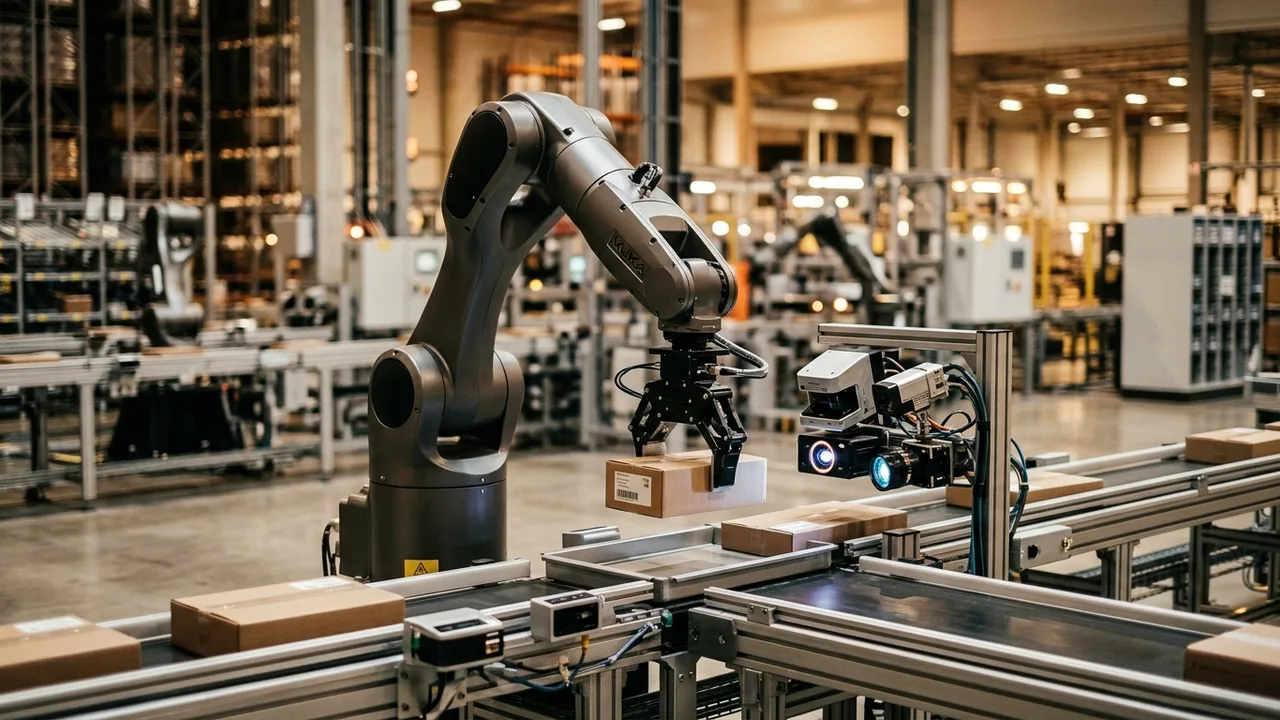
Until recently, enterprise artificial intelligence was fundamentally treated as a passive software utility: you opened a browser tab, typed an instruction into a prompt bar, and pasted the output into a spreadsheet or slide deck. In 2026, that paradigm has definitively collapsed. The explosive rise of Agentic AI has ushered in the era of digital workers — autonomous entities equipped with institutional context, formal corporate credentials, and the proactive ability to interact with internal tools and human colleagues alike.
Across forward-thinking organizations, these AI agents no longer handle merely customer service support tickets. They are provisioned with corporate email addresses under the company’s official domain, maintain verified profiles on platforms like Slack and Microsoft Teams, query production databases, author mission-critical operational briefs, and participate asynchronously in morning engineering standups. The historic divide between workplace software and full-fledged team headcount is dissolving before our eyes.
💡 Key Takeaways:
- From Copilot to Teammate: Agentic AI has evolved past static chatbots; autonomous digital workers execute end-to-end operational workflows, from legal document triage to complex ledger reconciliations.
- The World Economic Forum’s Milestone: The World Economic Forum (WEF) notes that current corporate executives represent the final managerial generation in history that will oversee teams composed entirely of human beings.
- Cultural and Governance Challenges in Emerging Markets: Beyond technical deployment, enterprises face pressing demands around identity management, proprietary data security, and preserving human employee purpose in blended hybrid squads.
From Copilot to Squad Member: Inside the Synthetic Workforce
The underlying technological catalyst is the convergence of multimodal reasoning models with external tool orchestration. Where early generation Large Language Models (LLMs) merely predicted the most probable next word, modern autonomous agents operate in persistent feedback loops of observation, reasoning, planning, and execution.
When an enterprise digital worker is onboarded into a software development or marketing squad, it does not wait for a human command every ten minutes. It monitors real-time telemetry, spots customer onboarding drop-offs, inspects API documentation, triggers test suites, writes code patches, and submits pull requests complete with architectural explanations for human senior leads to review.
As investigative reports from Fast Company Brasil emphasize, tech unicorns and multinational corporations have begun issuing segregated virtual credentials and role-based access tokens to agents serving as junior data analysts, compliance checkers, and contract reviewers. For the first time, corporate organizational charts explicitly feature synthetic colleagues holding shared quarterly objectives (OKRs) alongside human professionals.
The Three Pillars of Change: Scale, Cost, and Role Reconfiguration
The rapid enterprise integration of digital workers is not mere Silicon Valley hype; it is driven by relentless operational economics. Three structural forces anchor this shift:
1. Continuous Availability and Instant Elasticity
Unlike conventional operations constrained by physical fatigue and local labor shifts, digital workers operate continuously (24/7/365). Global supply chain desks and fraud detection pipelines can complete complex audits overnight without human burnout or logistical delays.
2. Radical Reduction in Marginal Cognitive Cost
The cost of executing routine cognitive workflows has fallen sharply. Work that previously required lengthy recruiting cycles, multi-week onboarding, and manual double-checking is now synthesized with high precision at cloud compute rates.
3. Elevating Human Professionals to “Orchestrators”
The primary transformation does not lie in blunt displacement, but in elevating human roles. As noted by Exame Inovação, human talent transitions from repetitive task execution to ethical oversight, high-context strategy, and auditing the hypotheses generated by their autonomous digital team members.
Governance, Security, and Workplace Morale
Despite unmistakable productivity surges, introducing synthetic peers into enterprises introduces critical security and cultural questions.
First stands the mandate for robust cybersecurity and privilege boundaries. How do enterprise architects guarantee that an autonomous agent with broad system privileges does not fall prey to indirect prompt injection or inadvertent disclosure of trade secrets? Leading compliance teams are now establishing cross-functional boards between Information Security, Legal, and People Operations to formalize Algorithmic Codes of Conduct.
Second is the psychological and cultural dimension. Organizational climate studies reveal that the sudden arrival of agents capable of completing intricate intellectual tasks in seconds can trigger acute workplace anxiety and demoralization among human employees. Leadership teams that fail to communicate this operational evolution transparently — backed by serious reskilling initiatives — risk eroding workplace trust.
Frequently Asked Questions (FAQ)
What distinguishes a “digital worker” from a traditional chatbot?
A standard chatbot is a reactive interface limited to prompt-and-response mechanics. A digital worker is an autonomous agent possessing persistent operational memory, verified identity tokens, and the capacity to coordinate multi-step workflows across diverse software ecosystems without continuous human intervention.
Will autonomous digital workers replace entry-level careers?
Routine triage and repetitive data gathering face severe compression. Conversely, demand is surging for professionals skilled in strategic orchestration, data provenance, AI auditing, and empathetic relationship management who can lead hybrid teams of synthetic and human contributors.
How do data protection laws treat AI agents?
Under existing international legal frameworks and local privacy statutes like Brazil’s LGPD, AI agents hold no legal personhood. All liability, compliance, and auditing duties rest solely with the operating enterprise, necessitating verifiable audit logs and accountable human-in-the-loop governance.
Conclusion: Leading the Blended Enterprise
The question confronting forward-thinking enterprise leaders is no longer whether digital workers will join their teams, but how thoughtfully and effectively they will orchestrate them. The evolution of artificial intelligence has transitioned from a technical software debate into a historic transformation of workplace sociology.
The enterprises that prevail in the coming decade will neither be those that resist automation nor those that attempt to bypass human insight. They will be the organizations that cultivate seamless harmony between untiring synthetic compute and the irreplaceable creativity, empathy, and wisdom of human minds.
Read also our in-depth analysis on Shadow AI and enterprise security.
🔗 Consulted Sources & References:
- Fast Company Brasil — The rise of AI agents as everyday coworkers and the architecture of hybrid squads
- Exame Inovação — Enterprise transitions toward Agentic AI and executive leadership challenges
- World Economic Forum (WEF) — The Future of Jobs Report: Strategic guidelines for synthetic workforce governance
- Gartner Research — Predicts 2026: Autonomous Digital Workers Transforming Enterprise Application Architecture
How is your organization adapting to the integration of digital coworkers? Share your thoughts in the comments and share this piece with your team.